Best Non-Toxic Coffee Makers in Canada (2026): Material Safety, Health, and Brewing Performance
A practical guide to the healthiest coffee brewers for Canadian kitchens — from glass pour-overs to SCA-certified drip machines — with material notes, approximate CAD pricing, and how to reduce plastic in the hot water path.
Prices are approximate CAD from major Canadian retailers as of early 2026 and change frequently. We have not independently lab-tested brewers for chemical migration; material descriptions follow manufacturer and retailer listings.
Editor's pick
Ratio Eight Coffee Maker
Affiliate link — we may earn a commission at no extra cost to you.
At a Glance
Best overall drip
Technivorm Moccamaster KBGV (~$476)Best premium drip
Ratio Eight (~$1,150)Best pour-over
Chemex Classic (~$85)Best budget pour-over
Melitta porcelain (~$32)Best French press
Espro P7 (~$190)Best moka (stainless)
Bialetti Venus (~$85)Best manual espresso
Flair 58 (~$795)Glass & metal press
AeroPress Premium (~$250)Coffee is a daily ritual for most Canadian adults. Industry reporting and the Coffee Association of Canada have described strong at-home consumption trends even as grocery coffee prices climb; Statistics Canada has documented sharp year-over-year increases in coffee prices at the retail level. Those forces push more households toward better equipment—and toward asking whether the machine itself belongs in a “clean kitchen” strategy alongside PFAS-free cookware and better kitchen air quality.
This guide explains how heat, acidity, and plastics interact in common brewers, which materials stay most inert in the hot path, and which models Canadian shoppers can buy with clearer confidence. Boreal Living note: We prioritize a plastic-minimal brew path (where water and coffee meet metal, glass, or ceramic) and verifiable manufacturer materials—not unfounded health claims.
The Canadian coffee context in 2026
Coffee remains embedded in Canadian routines. Trade and industry commentary routinely cites Canada as one of the highest per-capita coffee markets in the world, with specialty formats taking a growing share of spending. At the same time, price inflation at the grocery shelf has made home brewing an economic as well as a sensory upgrade.
| Topic | What we know | Source orientation |
|---|---|---|
| At-home consumption | A large majority of cups are still brewed at home in national survey work | Industry associations |
| Specialty share | Specialty and premium segments continue to grow as a portion of the market | Trade press |
| Retail prices | CPI-style reporting shows meaningful coffee price increases 2023–2025 | Statistics Canada |
| Timelines | Drive-through culture persists, but equipment sales follow the home barista trend | Retail + association data |
None of this requires perfectionism—it explains why durable, repairable brewers with transparent materials are having a moment in Toronto condos and Calgary bungalows alike.
Why your drip or pod machine gets scrutiny
The concern is not aesthetics; it is migration—small molecules moving from materials into the beverage—and physical shedding of plastic fragments under heat and mechanical stress. Coffee is acidic; brew water is very hot (roughly 92–96 °C for quality extraction). Those two factors accelerate whatever contact surfaces allow.
Chemical migration and “BPA-free” labels
Bisphenol A (BPA) has been heavily studied as an endocrine disruptor. Many kitchen plastics are now labeled BPA-free, but substitutes such as BPS or BPF appear in some products and have shown similar hormonal activity in academic work. Translation for buyers: “BPA-free” is not the same as “no concern under boiling conditions.”
Microplastics: what we can fairly say
Media coverage of UK and European work has highlighted microplastic particles detected in some hot drinks prepared with plastic-heavy equipment or cups. Important caveat: particle counts vary wildly by study design, cup type, and machine age. Treat any single headline number as illustrative, not a personal daily dose. The practical takeaway is simpler: if you want to reduce unknowns, reduce hot plastic contact.
Common plastics in coffee gear
| Plastic type | Typical use | Why it matters hot |
|---|---|---|
| Polypropylene (PP) | Baskets, housings, pods | Generally tougher than PET; still subject to wear |
| Polycarbonate (legacy) | Older reservoirs | Bisphenol migration concerns historically |
| ABS | Housings | Less often in direct hot liquid path |
| Silicone (not a thermoplastic) | Gaskets, seals | Often used where flexibility is needed; verify food-grade ratings |
Mold, biofilm, and maintenance
Any machine that holds moisture—especially pod systems with internal lines—can harbor biofilm if dried improperly. That is a hygiene issue distinct from plastic chemistry but equally relevant to a “healthy cup.” Our hidden kitchen toxins guide ties this mindset to the broader non-toxic kitchen.
Selection framing
We describe relative plastic exposure in the hot path (none, minimal, moderate) based on manufacturer diagrams and parts lists. Your tolerance may differ; use this as a shopping lens, not a medical verdict.
Defining “non-toxic” for brewers in 2026
For this article, non-toxic means:
- Hot-path materials that are glass, ceramic/porcelain, or food-grade stainless steel wherever possible.
- Cold-side plastic (tanks you fill with room-temperature water) accepted only when clearly identified as food-contact rated—still a compromise, but lower risk than plastic shower lines at extraction temperature.
- No mystery coatings on metal that contact coffee.
Borosilicate glass
Thermally shock resistant, non-porous, and easy to keep visually clean. Used in Chemex carafes, many premium glass brew chambers, and (in newer designs) press bodies.
Stainless steel
304/316 grades dominate premium brewers and presses. Nickel/chromium release into beverages has been studied; for typical food contact, levels are extremely low after initial uses. People with severe nickel allergies sometimes prefer glass or ceramic for prolonged contact.
Ceramic and porcelain
Excellent for manual drippers. Choose reputable brands and lead-free glazes; extremely cheap decorative ceramics are the main historical concern for heavy metals.
Regulatory reality
Health Canada sets frameworks for food-contact materials; manufacturers self-declare compliance. We cannot lab-test every unit. When in doubt, ask the brand for a clear diagram of the water path and part materials.
Detailed picks for Canadian buyers
Below, each card links out to a Canadian retailer where we track pricing. Use them alongside the comparison table to sort by brew method and budget.
How to read these picks
Each card sums up who the brewer is for, the main compromise, and how we score material honesty versus everyday brewing quality. Ratings are editorial, not lab scores.
Best overall automatic drip
Technivorm Moccamaster KBGV SelectSCA-leaning brew temperatures, a five-year warranty, and a copper boiling element with a glass carafe. Cold tank and basket use BPA/BPS/BPF-free plastics per Technivorm; hot water runs through metal so hot-path plastic stays lower than on typical big-box drips.
- Best for
- Households that brew a full pot most days and want repairable, predictable gear.
- Trade-off
- Premium price on Amazon.ca and no app-forward scheduling tricks.
Best premium automatic drip
Ratio Eight Coffee MakerWater moves through glass and stainless in the hot path while the machine handles bloom pulses like a barista pour-over. It is the clearest automation-first pick when you refuse hidden plastic tubing at extraction temperature.
- Best for
- Design-forward kitchens where budget matches obsession for materials and ritual.
- Trade-off
- Often around $1,150 CAD before grinders and accessories.
Strong value SCA drip
OXO Brew 8-Cup Coffee MakerSCA-certified performance in a smaller footprint with a single-serve accessory. Internals use more food plastic than Ratio or Moccamaster, but it is a practical upgrade from entry-level drips.
- Best for
- Condos and couples who want certified temps without flagship pricing.
- Trade-off
- Moderate internal plastic versus the two picks above.
Best minimalist pour-over
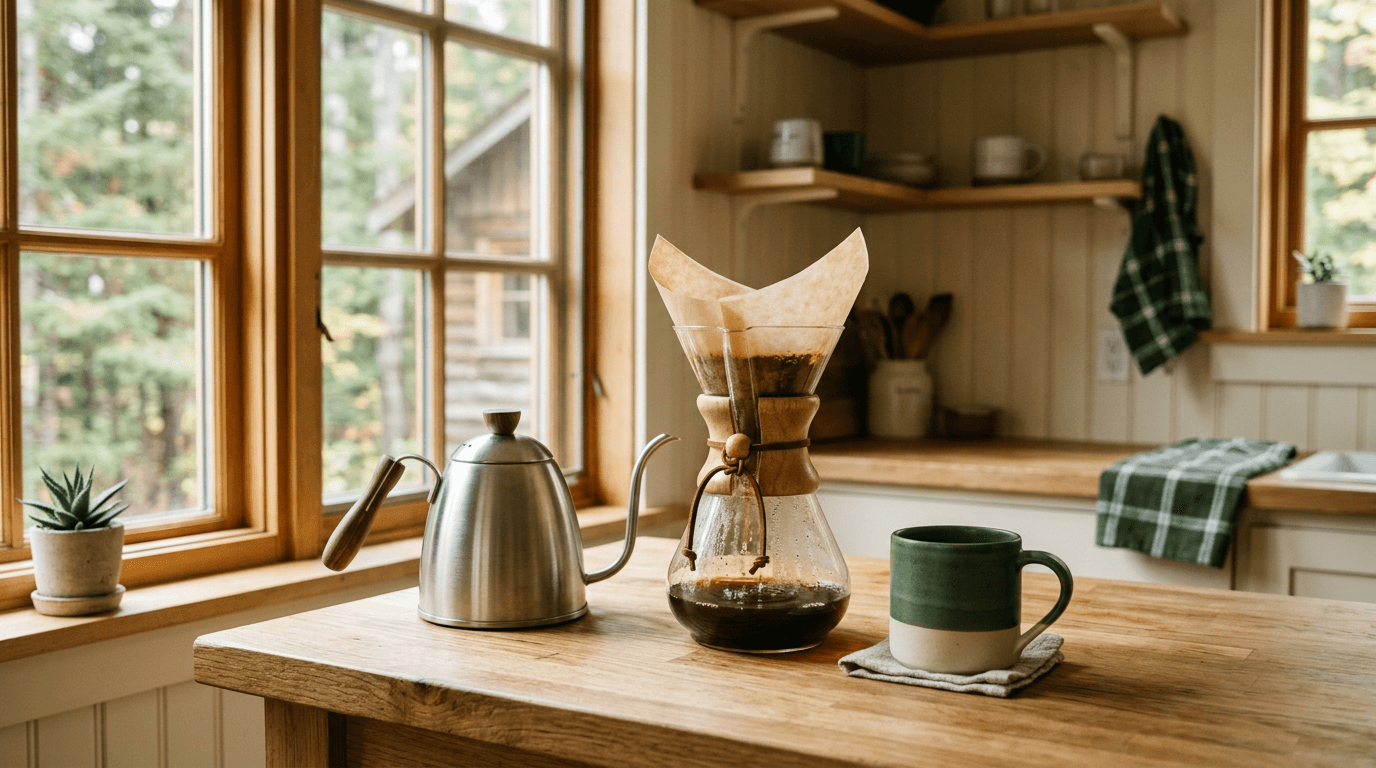
Chemex Classic Pour-Over (6-Cup)Borosilicate glass and a wood collar mean no brew-path plastic. Thick filters yield a clean, tea-like cup at the cost of breakability and ongoing paper spend.
- Best for
- Weekend ritual brewers who want the purest manual path.
- Trade-off
- Glass care and filter cost over the life of the brewer.
Best budget pour-over
Melitta Porcelain Pour-Over ConePorcelain cone that often sells under $40 on Amazon.ca and lasts decades. Pair with a gooseneck kettle for repeatable pours.
- Best for
- First-time manual brewers and students building a low-plastic setup.
- Trade-off
- Manual workflow only; no automation or warming plate.
Best insulated French press
Espro P7 French Press (32 oz)Double-wall stainless with a dual micro-filter that cuts grit versus classic mesh. Coffee and water stay on steel; a small amount of engineered plastic lives in the filter frame.
- Best for
- Press lovers who want cleaner cups and better heat retention.
- Trade-off
- Higher cost than basic presses; still not paper-filtered.
Large-format press
Stanley Classic Stay-Hot French Press (48 oz)Built for cottages and crews: big stainless body with a plastic lid liner. Mesh is coarser than Espro’s, so expect a bolder, grittier cup.
- Best for
- Families and hosts who need volume and durability outdoors.
- Trade-off
- Plastic lid components and a simpler filter stack.
Stainless moka pot
Bialetti Venus Stainless Steel Moka PotSwaps aluminum for stainless so acidic coffee is less likely to taste metallic and the pot works on induction. Gasket and handle plastics sit outside the brew column.
- Best for
- Stovetop espresso-style coffee without another countertop appliance.
- Trade-off
- Silicone gasket maintenance and stovetop attention.
Manual espresso
Flair 58 Espresso MakerDelivers roughly 9-bar shots with a 58 mm basket and no boiler full of hidden tubing. Sold via Canadian specialists such as Eight Ounce Coffee; budget for a capable burr grinder.
- Best for
- Espresso geeks avoiding plastic-heavy super-automatics.
- Trade-off
- Learning curve and manual prep every shot.
Glass-and-metal immersion
AeroPress Premium Coffee MakerDouble-wall borosilicate chamber with metal components per AeroPress—aligned with a plastic-free brew path but hand-wash only and less travel-proof than the classic plastic press.
- Best for
- Immersion fans who want the AeroPress workflow without a plastic chamber.
- Trade-off
- Premium price, fragility versus the original, and less packability.
Top picks: Non-toxic coffee brewers
Affiliate links — we may earn a commission at no extra cost to you.
Compare models side by side
Sort and filter by brew style, price, and how much plastic sits in the hot path. Prices are rounded CAD for quick comparison; confirm at checkout.
Compare brewers
Filter by brew style or budget. Sort price or score from the column headers.
We may earn a commission from qualifying purchases. Prices change often—confirm at checkout.
| Product | Type | Hot-path exposure | Materials | ||
|---|---|---|---|---|---|
OXO Brew 8-CupValue drip | Auto drip | Check price Moderate Moderate internals | Stainless / plastic | $289 | 8.6 |
Stanley Stay-Hot 48 ozBig press | French press | Check price Minimal Lid liner | Stainless steel | $105 | 8.9 |
Melitta porcelainBudget pour | Pour-over | Check price None None | Porcelain | $32 | 9.0 |
Moccamaster KBGVTop drip | Auto drip | Check price Minimal Minimal (cold tank / basket) | Glass / copper | $476 | 9.1 |
Bialetti VenusTop moka | Moka | Check price Minimal Handle only | Stainless steel | $85 | 9.2 |
AeroPress PremiumGlass press | Immersion press | Check price None None (brew path) | Glass / metal | $250 | 9.3 |
Espro P7Top press | French press | Check price Minimal Minimal (filter frame) | Stainless steel | $189 | 9.4 |
Ratio EightPremium drip | Auto drip | Check price None None in hot path | Glass / stainless | $1150 | 9.5 |
Flair 58Top espresso | Manual espresso | Check price None None | Stainless / wood | $795 | 9.7 |
Chemex ClassicPour pick | Pour-over | Check price None None | Borosilicate glass | $85 | 9.8 |
Moderate internals
Lid liner
Minimal (cold tank / basket)
None (brew path)
Minimal (filter frame)
None in hot path
Exposure sums up how much plastic meets very hot water or coffee in normal use (from manufacturer diagrams, not lab tests). Prices are approximate CAD from Canadian retailers in early 2026.
Accessories that keep the chain clean
Grinders: Fresh grinding beats months in a valve bag. The Fellow Ode Gen 2 targets filter coffee with quiet flat burrs; the Baratza Encore remains the workhorse entry electric on many Canadian counters.
Kettles: For pour-over, a variable-temperature gooseneck with a fully stainless interior (no plastic sight window in the steam path) keeps variables consistent.
Filters: Paper removes oils (including cafestol); stainless reusables cut waste but change mouthfeel. Choose based on cholesterol concerns and taste.
Storage: Glass or stainless canisters with one-way valves beat opaque plastic tubs for monitoring bean freshness.
Buying guide: match the brewer to your morning
- One-button household: Start with Moccamaster or, if budget allows, Ratio Eight. Add OXO when you need a smaller price and accept more internal plastic.
- Weekend ritual: Chemex or Melitta plus a kettle.
- Strong stovetop coffee: Bialetti Venus.
- Espresso without a box full of tubes: Flair 58 and a real grinder.
- Cottage or crew: Stanley 48 oz press or Espro P7 for cleaner cups.
Pod math (rough)
Households on pods often spend hundreds per year on capsules alone. Switching to whole beans with a non-toxic brew path can redirect that budget toward better coffee and hardware that lasts—but only if you will actually use the equipment.
Maintenance: keep the machine honest
- Descale with food-grade citric acid when manufacturers allow it; it often smells less than vinegar and can be easier on some seals.
- Dry reservoirs and baskets open between uses to slow mold.
- Wash oily parts daily; rancid oils taste bad before they become a safety drama.
For broader context on what else hides in kitchens, see Hidden kitchen toxins and Teflon replacement.
Frequently asked questions
The Boreal Living verdict
You do not need a laboratory to make a better choice—you need a clear water path, honest materials, and a maintenance habit. For absolute material minimalism, manual glass or porcelain wins. For daily automation with fewer compromises than big-box drips, the Moccamaster KBGV and Ratio Eight are the standouts we trust on Canadian shelves. For espresso without hidden plumbing, the Flair 58 is the most convincing manual option we track.
Pair any of these with a burr grinder and sensible cleaning, and your morning cup aligns better with a low-plastic, health-conscious kitchen.