Best Raised Garden Beds in Canada (2026): Non-Toxic Guide
A 2026 guide to raised garden beds in Canada — comparing cedar, metal, and resin options with non-toxic material rankings, CAD pricing, interactive crop depth tools, and 20-year cost analysis.
This guide reflects manufacturer specifications, published research, and 2026 market pricing. We have not independently lab-tested these products for metal leaching. Affiliate links support Boreal Living at no extra cost to you. Prices are approximate CAD and may fluctuate.
Editor's pick
Vego Garden 17" 6-in-1 Modular Metal Raised Garden Bed
Affiliate link — we may earn a commission at no extra cost to you.
At a Glance
Best Overall
Keter Splendor ($180 CAD)Best Metal
Vego Garden 6-in-1 ($235 CAD)Best Cedar
Boldly Growing Cedar ($187 CAD)Best Budget
Land Guard Kit ($40 CAD)Best Canadian-Made
RGB Oasis Bed ($107 CAD)Growing Season
75–275 days (varies by region)
Best Long-Term Value
$9/yr (Aluzinc over 25 yrs)
Households Growing Food
59% of Canadians (StatsCan)
Why Raised Garden Beds Are Essential in Canada’s 2026 Economy
According to Dalhousie University’s 16th edition of Canada’s Food Price Report, families of four are now projected to spend an average of $17,572 on food annually — an increase of up to $995 from 2025 levels. With food prices rising sharply over the last five years, a quarter of Canadian households are now categorized as food insecure. Statistics Canada reports that 59% of households now cultivate fruit, herbs, or vegetables for personal use, up from 56% a decade ago.
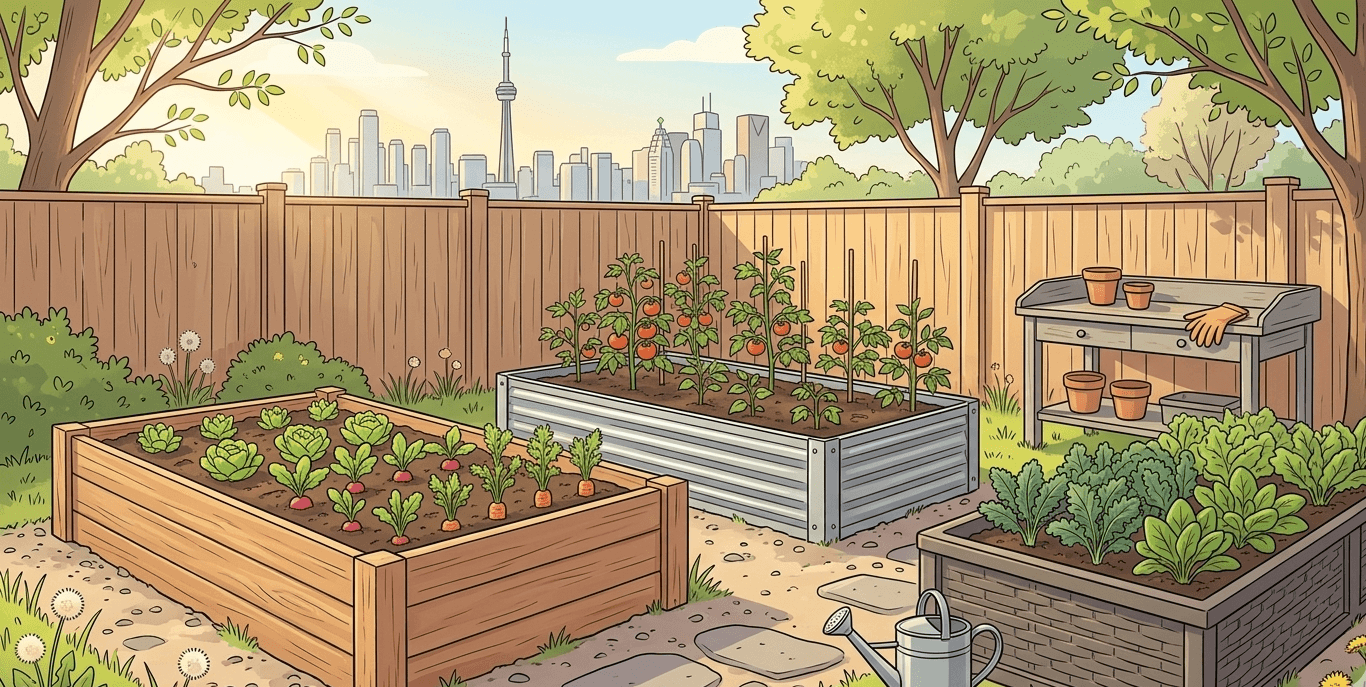
For Canadian gardeners navigating the constraints of urban density, short growing seasons, and the need for chemical-free food production, raised beds offer a strategic advantage that in-ground gardening cannot match. A 4×2 ft raised bed producing 30 lbs of tomatoes at current grocery rates can generate $100–150 in produce value per season — enough to begin offsetting its purchase cost within the first year.
This guide evaluates the ten best options for 2026 based on manufacturer specifications, published reviews, and Canadian market availability.
The Strategic Case for Raised Beds in Canada
Thermal Advantage: Extending the Growing Window
In a climate where the growing season is often restricted to fewer than 150 days in many major urban centres, every incremental advantage in soil temperature matters. Soil contained within raised structures thaws noticeably faster than ground-level earth during the spring transition. This is particularly pronounced in modular metal beds and dark-stained cedar units, where the walls absorb and conduct solar radiation into the soil column.
This thermal advantage allows for earlier germination of cool-season “sprinter” crops — radishes, spinach, and kale — effectively extending the functional growing window by two to three weeks. For gardeners in zones 3–5, those extra weeks can mean the difference between a full harvest and a disappointing season.
Drainage and Root Health
Raised beds address the systemic drainage issues inherent in Canadian landscapes during the post-winter thaw. In regions like Quebec and Ontario, soil saturation following snowmelt often leads to waterlogging and compaction, which can asphyxiate delicate root systems and foster fungal pathogens. Raised beds — particularly those with open-bottom designs — facilitate superior aeration and consistent drainage, keeping roots oxygenated even during heavy spring rains.
Urban Density and Space Efficiency
Statistics Canada highlights that 30% of gardening households now garden on balconies, a trend particularly dominant in Victoria, Montreal, and Toronto. Vertical and elevated raised beds maximize caloric output per square foot, transforming constrained outdoor spaces into productive micro-farms. For a deeper dive into high-rise food production, see our Balcony Garden Guide for High-Rise Living.
Pest Deterrent Bonus
The height provided by elevated and containerized beds significantly mitigates pressure from squirrels, raccoons, and the pervasive European slug — reducing reliance on chemical deterrents and aligning with non-toxic growing principles.
Non-Toxic Materials Guide: What’s Safe for Your Soil
The materials used to construct a raised bed are in permanent contact with the soil and moisture that nourish your plants. Any chemical leaching is a primary concern for health-conscious growers.
Untreated Cedar: The Gold Standard for Purity
Western Red Cedar is naturally rich in tannins and oils that provide inherent resistance to rot, insect infestation, and decay. Because cedar requires no chemical treatments to withstand the elements, it provides a 100% pure growing environment for organic vegetables. It is particularly valued for its insulating properties, which buffer plant roots against sharp temperature fluctuations common in zone 3 and zone 4 regions. Cedar beds typically last 8–12 years before requiring replacement.
Aluzinc and Galvanized Steel: Engineered for Longevity
Modern high-quality metal beds are constructed from galvanized steel or Aluzinc (a zinc-aluminum-magnesium alloy). Contrary to legacy concerns, university extension research and government soil science guidance confirm that properly manufactured galvanized steel poses negligible leaching risk in typical garden soil conditions (pH 5.5–7.0). Zinc is an essential plant micronutrient, and trace leaching under normal conditions is typically beneficial rather than harmful.
Premium brands such as Vego Garden and Olle Gardens use Aluzinc, which offers 2–6 times the corrosion resistance of standard galvanized steel according to industry testing. These materials are often finished with certified non-toxic coatings such as AkzoNobel paint. Metal beds offer an expected lifespan of 20–30 years.
How Materials Respond to Canadian Freeze-Thaw Cycles
The Canadian winter’s rapid transitions between deep freezes and occasional thaws are structurally taxing on all outdoor materials. Aluzinc and RGB Steel experience negligible structural deformation under freeze-thaw cycling, with connections remaining tight across seasons — making them the most resilient choice for high-latitude provinces. Natural Cedar absorbs atmospheric moisture; while inherently resilient, repeated freeze-thaw cycles can lead to checked grain or joint loosening over several years. Inspect hardware annually after spring thaw. UV-Stabilized Resin is engineered for extreme temperature ranges, but lower-grade plastics can become brittle and fracture under heavy snow loads — always verify the manufacturer specifies UV-stabilized polypropylene or HDPE.
Materials to Avoid
Red Flags: Materials That Contaminate Your Soil
CCA-Treated Wood: Lumber treated with Chromated Copper Arsenate (banned for residential use in Canada and the US since 2004) may still exist in salvaged materials. Arsenic migrates into soil and is absorbed by root crops. Creosote Railway Ties: Saturated with coal tar derivatives — highly toxic to both human health and soil biology. Low-Grade Plastics: Inferior PVC garden beds can leach phthalates and BPA, particularly under UV radiation and freeze-thaw stress. Only UV-stabilized HDPE or polypropylene should be used.
Top 10 Raised Garden Beds for Canada (2026)
The following products were selected based on manufacturer specifications, published reviews, and Canadian market availability. All prices are approximate CAD as of early 2026.
Our Top Picks: Raised Garden Beds
Affiliate links — we may earn a commission at no extra cost to you.
1. Keter Splendor Self-Watering Raised Garden Bed
The Keter Splendor is our top recommendation for the 2026 growing season, particularly for urban decks and patios. Constructed from UV-stabilized polypropylene designed for year-round outdoor use, including freeze-thaw conditions, it maintains structural integrity across Canadian seasons. Its ergonomic 30-inch height eliminates back strain during planting and harvesting.
The integrated self-watering system includes a clear gauge for precision moisture management, preventing the root decay caused by manual overwatering. No-tool assembly takes under 15 minutes. The non-toxic resin construction requires zero maintenance — no staining, sealing, or rust prevention.
The 11.5-inch planting tray depth may be insufficient for deep root crops like parsnips. Rating: 9.8/10 · $180 CAD
2. Vego Garden 6-in-1 Modular Metal Raised Bed
Vego Garden has redefined the metal bed category through modular configuration and metallurgical integrity. The 6-in-1 kit allows configurations from a compact square to a long, narrow row. Utilizing proprietary VZ 2.0 material — steel coated with a dense zinc-aluminum-magnesium alloy — these beds are engineered for a 20+ year lifespan. AkzoNobel non-toxic paint reinforces the safety profile for organic food production.
The 17-inch wall height provides optimal soil volume for complex root systems. High-albedo surfaces reflect heat, maintaining moderate soil temperatures. Assembly is hardware-intensive, often requiring 45–60 minutes for a single person. Rating: 9.7/10 · $235 CAD
3. Boldly Growing Cedar Raised Planter Box
The Boldly Growing Cedar Planter is a testament to the enduring utility of natural materials. Constructed from untreated, rot-resistant yellow cedar, it offers the safest possible environment for families focused on organic purity. The thick boards provide high thermal mass — critical for protecting soil microbes during sharp temperature drops in Canadian spring nights.
The 100% natural wood ensures zero risk of synthetic chemical leaching. Cedar’s natural aromatic properties serve as a secondary deterrent for certain common garden pests. As a biodegradable material, expect 5–10 years of service life in humid regions; annual non-toxic oil treatment extends this. Rating: 9.2/10 · $187 CAD
4. Land Guard Galvanized Raised Garden Bed Kit
For households prioritizing calorie output over aesthetic customization, the Land Guard kit provides an exceptionally cost-effective entry point. While the metal gauge is thinner than premium Aluzinc models (0.78 mm), it provides a durable alternative to wood for gardeners on a strict budget. Internal stabilizing crossbars prevent walls from bowing under the hydrostatic pressure of wet soil.
The low acquisition cost allows for rapid scaling — making it possible to grow a season’s worth of produce for the price of a single grocery run. Top edges are sharp and may require a rubber safety strip. Rating: 8.5/10 · $40 CAD
Best Budget Picks
Affiliate links — we may earn a commission at no extra cost to you.
How to Evaluate Raised Bed Quality
Before purchasing, check three things: steel gauge thickness (lower gauge = thicker metal), coating certifications (look for AkzoNobel or equivalent non-toxic paint), and corner joint design (bolt-through connections outlast snap-fit). For wood beds, verify the species is naturally rot-resistant (cedar, redwood) rather than chemically treated.
5. Raised Garden Beds Canada “Oasis” Bed
The Oasis bed is one of the few high-performance options manufactured locally within Canada. Specifically designed to survive Prairie and northern Ontario “deep freeze” winters, it uses high-gauge RGB steel alloy with 0.8 mm thickness — structural rigidity that far exceeds imported budget models. Built to last 25+ years with a low carbon footprint from local fabrication.
The integrated safety lip is a standard feature, prioritizing safety for children and pets. Limited retail colour availability. Rating: 9.5/10 · $107 CAD
6. Jumbl Canadian Cedar Elevated Garden Bed
The Jumbl elevated system is designed for accessibility and convenience. By raising the soil column to 30 inches, the bed allows gardening while standing or sitting — essential for seniors or those with chronic joint conditions. Constructed from premium Canadian red cedar with a plastic liner featuring strategically placed seep holes for moisture balance.
Red cedar’s natural humidity resistance makes it ideal for coastal regions like Vancouver Island. The 9-inch soil depth is restrictive for large vegetables such as zucchini. Rating: 9.1/10 · $180 CAD
7. Olle Gardens 12-in-1 Modular Raised Bed
The Olle Gardens system prioritizes material longevity with 24-gauge galvanized steel and an Aluzinc coating, creating a two-way corrosion barrier even in salted environments. With 12 potential configurations, it offers the highest geometric flexibility in the metal category.
Open-bottom design maintains soil biodiversity. Heat-resistant properties keep soil cooler during summer heatwaves. Rounded corners and heavy-duty rubber edging minimize the risk of cuts during planting and harvest. Rating: 9.4/10 · $199 CAD
Premium Picks
Affiliate links — we may earn a commission at no extra cost to you.
8. Best Choice Products Mobile Raised Garden Bed
This mobile planter features four lockable wheels, allowing gardeners to follow the sun throughout the season — essential for urban residents whose balconies have shifting shade patterns. Constructed from rot-resistant fir wood with a built-in storage shelf for organic nutrients and tools.
High mobility is ideal for renters who need to relocate their garden. Fir wood is generally less durable than cedar, showing degradation after 4–5 years in wet climates. Rating: 8.8/10 · $140 CAD
9. Outland Living Vertical Raised Garden Bed
The Outland Living system represents the most efficient use of vertical space available. It allows cultivation of 10 lineal feet of plants within a footprint of only 6 square feet — a critical ratio for high-rise dwellers. Bins are constructed from 100% new polypropylene, certified free from lead, mercury, and BPA. A cascading drainage system distributes water efficiently through the layers.
Removable containers facilitate easy seasonal cleaning. The freestanding design requires zero mounting — completely renter-friendly. Not suitable for heavy vining crops. Rating: 9.0/10 · $105 CAD
10. Greenland Gardener Double Raised Bed Kit
Greenland Gardener offers a functional, eco-conscious kit made from recycled BPA-free plastic and untreated hardwood composite. The double kit is effective for families looking to separate different plant types — an organic vegetable patch alongside a cutting flower bed.
The patented corner system requires zero tools, snapping together in minutes. Composite material resists warping after freeze-thaw cycles. The 8-inch wall height is the absolute minimum for standard gardening and may need supplemental soil mounding for root crops. Rating: 8.3/10 · $110 CAD
Full Comparison Table
Sort by any column, filter by material type or budget, and tap any product on mobile for full details. All prices are approximate CAD as of March 2026.
We may earn a commission from qualifying purchases. Prices change often—confirm at checkout.
| Product | Material | Size | ||
|---|---|---|---|---|
Greenland Double Kit Best Beginner | Recycled Composite | Check price 84×42×8" | $110 | 8.3 |
Land Guard Kit Best Budget | Galvanized Steel | Check price 48×24×12" | $40 | 8.5 |
Best Choice Mobile Best Portable | Fir Wood | Check price 48×24×32" | $140 | 8.8 |
Outland Living Vertical Best Balcony | Steel/PP Bins | Check price 25×19×50" | $105 | 9.0 |
Jumbl Cedar Elevated Most Ergonomic | Canadian Red Cedar | Check price 49×23×30" | $180 | 9.1 |
Boldly Growing Cedar Best Cedar | Untreated Cedar | Check price 32×24×18" | $187 | 9.2 |
Olle Gardens 12-in-1 Most Durable | Aluzinc 24-Gauge | Check price 80×40×17" | $199 | 9.4 |
RGB Oasis Bed Best Canadian | 0.8mm RGB Steel | Check price 59×24×17" | $107 | 9.5 |
Vego Garden 6-in-1 Best Metal | Aluzinc Steel | Check price 60×42×17" | $235 | 9.7 |
Keter Splendor Best Overall | UV-Stabilized Resin | Check price 45×19×30" | $180 | 9.8 |
All products verified for non-toxic materials. Click column headers to sort. Prices are approximate CAD as of March 2026 and may vary by retailer.
Soil Depth Guide: Match Your Bed to Your Crops
The physical dimensions of a raised bed should be determined by the physiological requirements of the intended crops. A mismatch between soil depth and root expansion leads to stunted growth and reduced caloric output. Use this interactive calculator to plan your bed depth based on what you want to grow.
Soil Depth Calculator
Select the crops you plan to grow. The calculator recommends the minimum bed depth for your selection.
Recommended Minimum Depth
18″ (46 cm)
Based on 3 selected crops. The deepest-rooted selection (Tomatoes) determines the minimum depth.
Crop Reference
The Hugelkultur Technique: Save on Soil Costs
For beds deeper than 18 inches, fill the bottom 50% with organic debris — logs, branches, and leaves. This material decomposes slowly, providing long-term nutrient release and reducing the premium soil required by half. The technique is centuries old and particularly effective in raised beds where drainage is already optimized.
20-Year Economic Lifecycle Analysis
The initial acquisition cost is often a deceptive metric. A standard wooden bed may cost less upfront but typically requires replacement every 5–8 years due to rot and soil pressure. Use this calculator to compare total ownership costs across materials.
20-Year Cost Calculator
Compare total cost of ownership across materials. Adjust the planning horizon to see how costs scale.
Aluzinc Steel (Premium)
e.g. Vego Garden 6-in-1
$235
$12/yr
Galvanized Steel (Budget)
e.g. Land Guard Kit
$80
$4/yr
Natural Cedar
e.g. Boldly Growing Planter
$861
$43/yr
UV-Stabilized Resin
e.g. Keter Splendor
$360
$18/yr
Estimates assume same-price replacement. Maintenance includes annual non-toxic oil treatment for cedar. Does not include soil, accessories, or inflation.
For Canadian households viewing gardening as a multi-decade strategy for food security, the premium metal system is the economically superior choice — averaging roughly $9 CAD per year over a 25-year lifespan versus approximately $45 CAD per year for untreated cedar (including replacement costs and annual oil treatment).
Canadian Frost Dates and Growing Season Reference
Success in a 2026 Canadian garden depends on understanding your local frost timeline. Natural Resources Canada’s updated plant hardiness zone map (released July 2025) shows that zones have shifted by half a zone to two full zones since the 1961–1990 baseline, with the largest increases in western and northwestern Canada. This introduces new possibilities for heat-loving crops in the southern Prairies while creating instability during the spring transition.
Approximate Last Frost Dates for Major Canadian Cities
Add your planting delay (from the calculator above) to these dates for your balcony planting window.
When to Transplant Tender Varieties
Wait for consistent nocturnal temperatures above 10°C (50°F) before transplanting tomatoes, peppers, and other heat-loving crops outdoors. In most of Ontario and Quebec, this means waiting until after the May 24 long weekend. BC coastal gardeners can typically start 4–6 weeks earlier.
Essential Accessories for the Canadian Garden
A raised bed is a container; productivity depends on the quality of inputs and environmental protection.
Specialized Soil
Traditional ground soil is too dense for raised beds and causes compaction. Use a “Raised Bed Mix” composed of 60% topsoil, 30% organic compost, and 10% aerating material like vermiculite or coir.
Miracle-Gro Organic Raised Bed Soil (1.5 cu. ft., OMRI listed) is available for approximately $13 CAD and meets non-toxic, organic standards.
Season Extension
The unpredictable Canadian spring demands physical barriers. Frost covers protect tender seedlings from sudden nocturnal temperature drops common until late May.
Vego Garden Frost Cover & Mesh System ($65 CAD) creates a greenhouse effect, stabilizing ambient temperatures and protecting plants from urban wildlife.
FAQ: Essential Knowledge for Canadian Gardeners
Filter by category or tap any question to expand. These answers reflect current manufacturer specifications and Canadian horticultural research.
The Boreal Living Verdict
The transition to home-based food production is a powerful response to the structural challenges of 2026 food inflation and a commitment to non-toxic living. By selecting high-quality raised beds, Canadian households can significantly enhance their agricultural yield while reducing dependence on chemically intensive industrial supply chains.
For the Urban High-Rise Resident: The Keter Splendor remains the gold standard for its integrated self-watering technology and proven urban durability.
For the Long-Term Homestead Strategy: The Vego Garden 6-in-1 offers the best investment value — a 20-year lifespan and modular flexibility for an evolving backyard.
For the Quality-Conscious Canadian: The RGB Steel Oasis Bed represents the peak of domestic manufacturing, with a high-gauge frame designed specifically for northern winters.
Spring inventory on Amazon.ca and at retailers like Canadian Tire sells out rapidly. Initiating your 2026 growing season plan now ensures your household is prepared to reap the caloric and financial benefits of a home-grown organic harvest.
Get Smarter About Your Home
Weekly tips on gardening, home projects, and living well.